Non-Surgical Spinal Decompression in Sarasota
Cervical and lumbar decompression on two Chattanooga Triton DTS tables, considered for selected cases after examination.
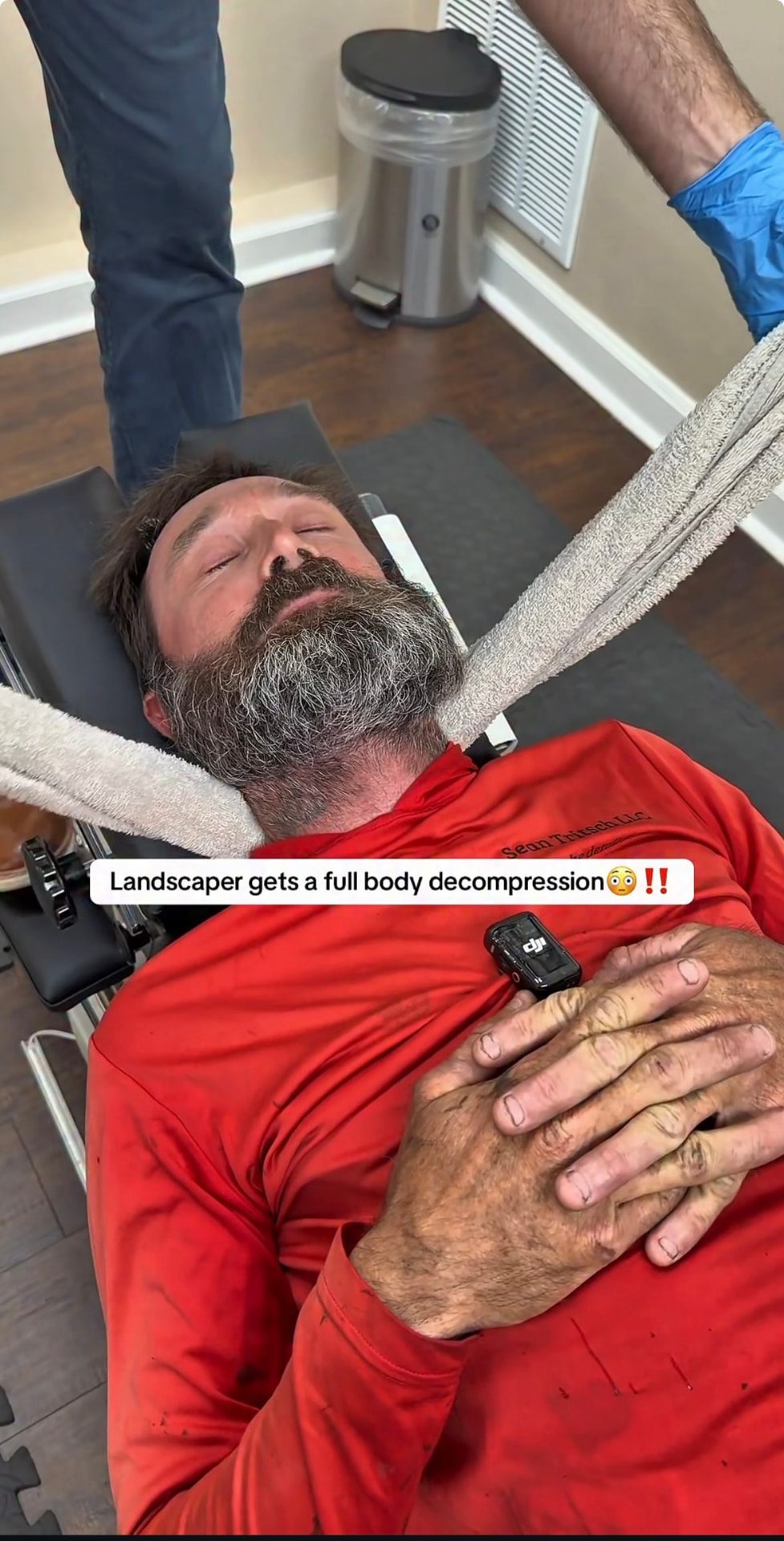
Spinal decompression is a form of motorized traction. Bretz Chiropractic Clinic has two Chattanooga Triton DTS tables, used for selected cervical (neck) and lumbar (low-back) cases. The table applies controlled, computer-guided traction to the targeted region of the spine. Claims that decompression pulls a disc back into place or repairs disc tissue go beyond what the evidence supports. Some people with disc-related or nerve-related symptoms report improvement with traction-based care, while others do not. Whether decompression is appropriate depends on the examination, your history, and relevant imaging when clinically indicated, and results vary.
Examination and imaging come first
Before decompression is considered, Dr. Bretz takes a history and performs orthopedic and neurological testing. Existing imaging is reviewed, and imaging is obtained when clinically indicated. A bulging or herniated disc may irritate a nerve but does not always do so, so imaging findings are interpreted together with your symptoms and examination rather than on their own.
Cervical and lumbar applications
For lumbar cases, you lie on the table with a pelvic harness and upper-body support, and traction is directed to the low back. For cervical cases, a head and neck support is used and traction is directed to the neck. Decompression may be considered for selected cases involving disc-related low-back pain, sciatica, or disc-related neck and arm symptoms, depending on the findings.
Individualized settings and progress checks
Settings such as force, angle, hold and rest times, and session length are chosen for your case and may be changed as care continues. There is no single protocol that fits everyone. Progress is checked through re-examination, and the plan is adjusted, paused, or discontinued based on those findings. Decompression may be combined with other care in the clinic's non-surgical disc care program when appropriate.
Contraindications, referral, and emergencies
Contraindications and precautions are screened at the first visit and may include fracture, severe osteoporosis, spinal instability, surgical hardware or fusion at the target level, certain tumors or infections, and pregnancy. If conservative care is not suitable or not helping, you may be referred to a medical physician or specialist. New or worsening weakness, numbness in the groin or saddle area, loss of bowel or bladder control, or symptoms after major trauma need emergency medical evaluation — call 911 or go to the nearest emergency department.
- Two Chattanooga Triton DTS tables
- Selected cervical and lumbar cases
- Examination first; imaging when clinically indicated
- Individualized settings and re-examination
- Screened for contraindications; results vary
Equipment references
Related Services
Non-Surgical Disc Care Program
An individualized conservative plan for selected disc-related neck, back, arm, and leg symptoms, built after examination and reviewed through re-examination.
Spinal Adjustments
Adjustments selected for your examination findings and your comfort — not a one-size-fits-all routine.
Class 4 Laser Therapy
The clinic's LZR7 ZX2 Class 4 laser, used as a clinician-directed adjunct within an individualized plan.
Spinal Decompression — FAQ
Questions about spinal decompression?
Call or book online to discuss an appointment and ask questions about your visit.